Biochar improves soil structure, water retention, and nutrient availability while permanently sequestering carbon.
It is used across agriculture, land restoration, and environmental remediation.
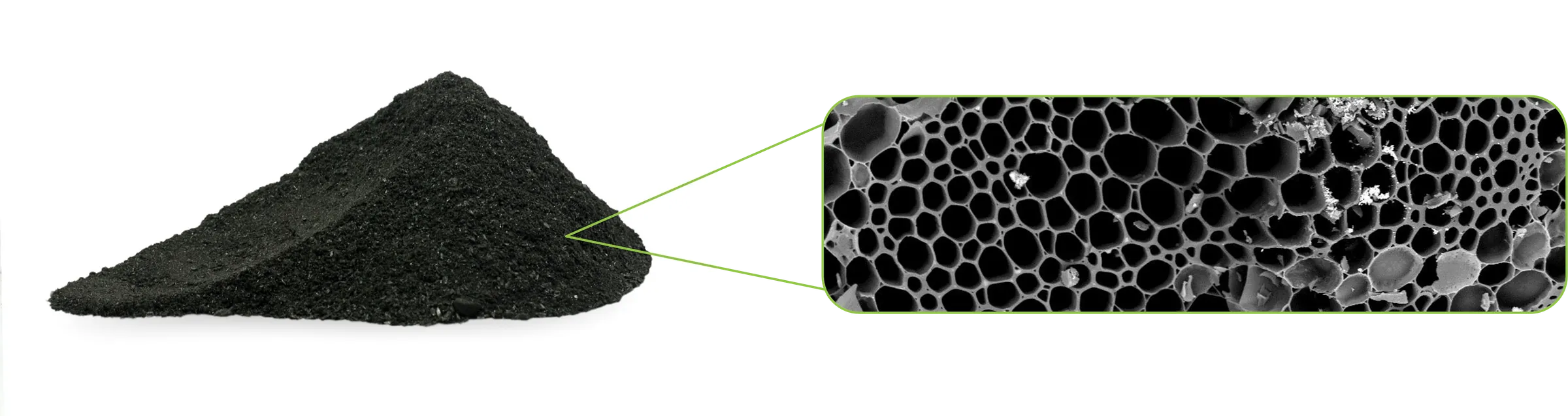
Key features
Soil health
Improves water retention, nutrient cycling, and microbial activity in degraded soils.
Carbon sequestration
Highly durable carbon removal when applied to soil. Certified under leading carbon standards.
Versatile application
Suitable for broad-acre agriculture, horticulture, composting, and land restoration projects.
Consistent quality
Produced under controlled pyrolysis conditions with batch-level traceability.
Frequently Asked Questions
How does biochar improve soil?
Biochar increases water retention, improves nutrient availability, enhances microbial activity, and reduces soil acidity. Effects are most pronounced in sandy or degraded soils. Biochar also functions as a long-term carbon sink in the soil.
What feedstocks does PyroCCS use to produce biochar?
PyroCCS produces biochar from a range of biomass types including encroaching bush in Namibia, agricultural residues in India, forestry residues, and processing wastes. Our Gravity pyrolysis systems are configurable for diverse biomass streams.
Can biochar handle wet biomass feedstock?
Standard pyrolysis requires biomass moisture below approximately 20 percent. For wetter feedstocks, our deployments include drying systems that use waste heat from the pyrolysis process to pre-dry biomass. This is part of the integrated plant configuration we provide.
Is PyroCCS biochar certified?
Yes. PyroCCS biochar is produced under European Biochar Certificate (EBC) protocols and meets the quality standards of leading certification bodies including Carbon Standards International. Specific certifications vary by project.
What is the difference between biochar and activated carbon?
Biochar is a stable carbon material produced by pyrolysis, primarily used for soil amendment and carbon sequestration. Activated carbon is biochar that has undergone additional thermal or chemical activation to dramatically increase its surface area for filtration and adsorption applications. PyroCCS produces both.
Contact Us
Reach out to discuss supply, specifications, and pricing.